Announcing – Longing to Awaken: Buddhist Devotion in Tibetan Poetry and Song


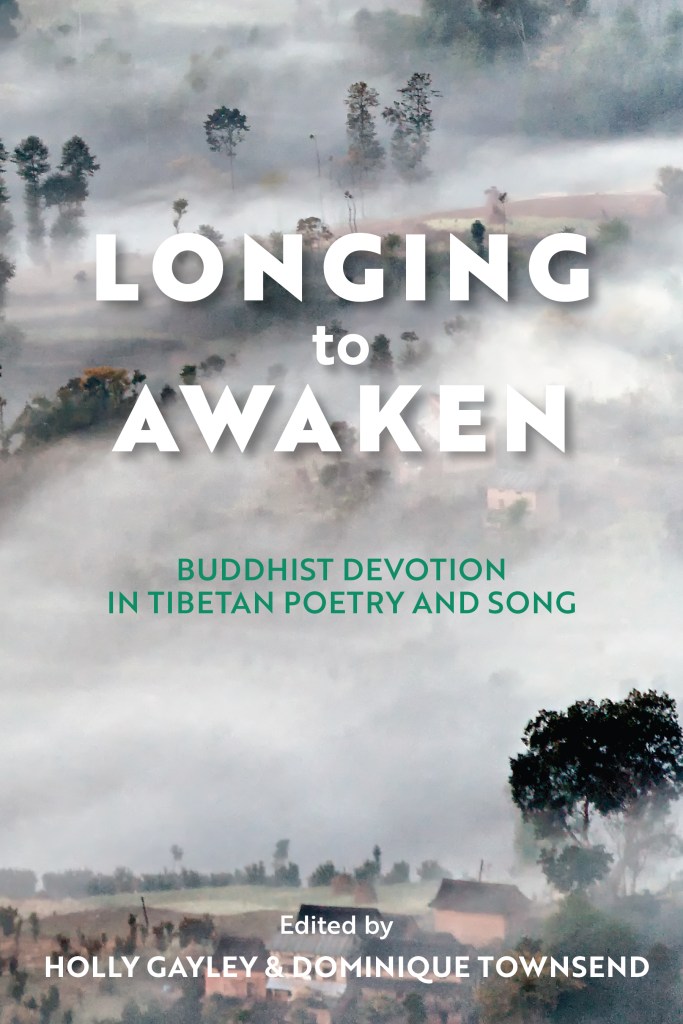
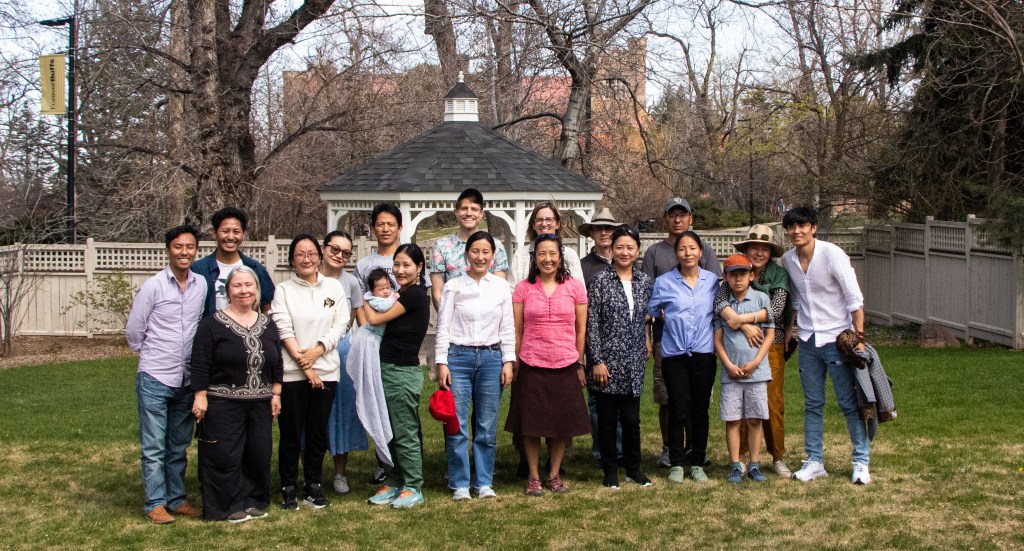
The long-awaited fruition of the first Lotsawa Translation Workshop in 2018 at CU Boulder. Thanks to the twenty-five translators who contributed original translations and essays and especially my co-editor Dominique Townsend who stayed the course.

Longing to Awaken features translations of Buddhist devotional poems and songs composed by revered Tibetan masters from diverse traditions and time periods. The anthology invites readers to experience a variety of poetic forms that embody a range of emotions, from grief and longing to skepticism and humor, demonstrating the ways that poetry can inspire faith as well as reflect the profundity and at times fraught nature of the teacher-student relationship. This collection gives weight to literary—not simply literal—translation as a crucial endeavor in the transmission of Buddhism today, one with the potential to raise the profile of Tibetan poetry onto the stage of global literature.

Featuring a remarkable interview with esteemed Tibetan master Jetsün Khandro Rinpoché to elucidate Buddhist devotion and a landmark essay by Lama Jabb articulating a Tibetan theory for translating poetry.

https://www.upress.virginia.edu/title/5653/

Recent Collaborations

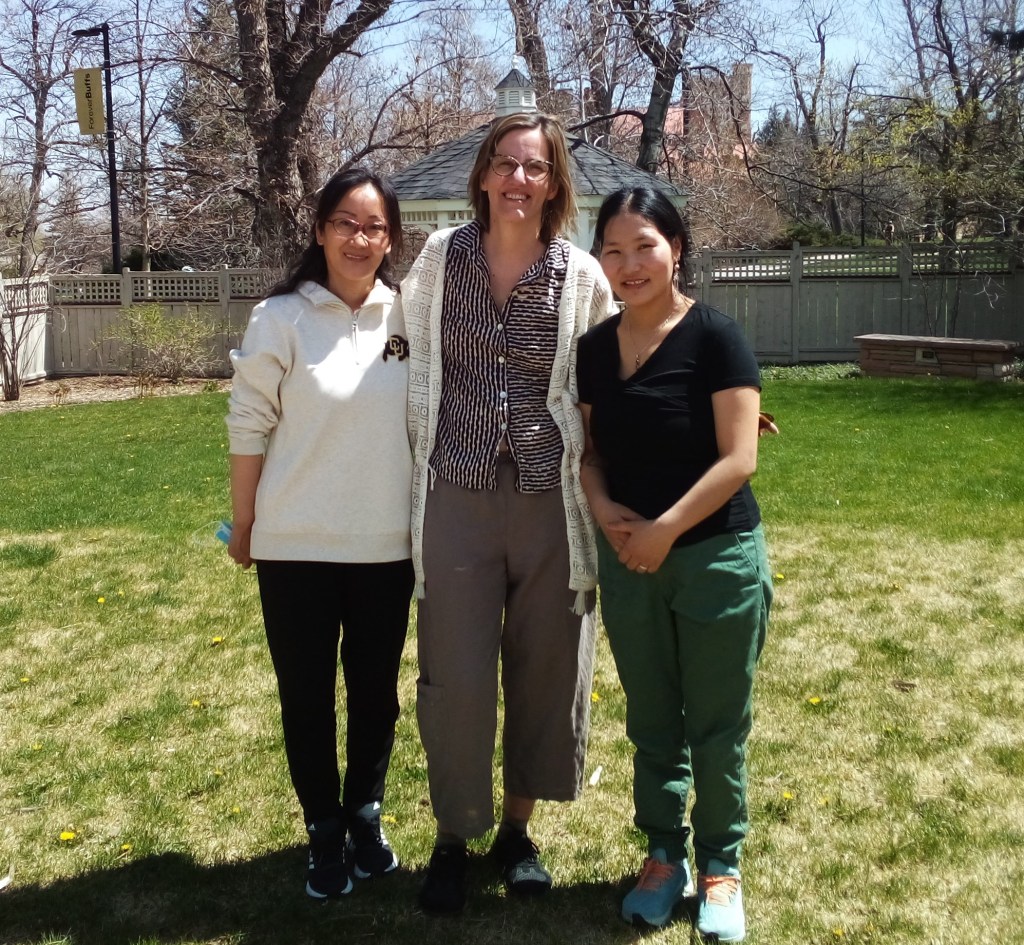
Tsedron Kyi, Holly Gayley, and Somtso Bhum at the “Emerging Voices: Tibetan Women Writers” symposium at CU Boulder in April 2022

It’s been such an honor in the last year or so to collaborate with Tibetan women writers, Tsedron Kyi and Tsering Yangzom Lama, alongside scholars Somtso Bhum and Dawa Lokyitsang in their Ph.D. programs at Northwestern University and the University of Colorado Boulder, respectively.

I have been moved by our conversations and the many twists and turns in thematic focus and textual analysis that emerge through the collaborative process. This has been possible due to the various gatherings with Tibetan women writers since April 2022 at UVA, CU Boulder, Northwestern, and INALCO. It is so enriching to engage with authors about their own writings and be informed by the perspectives and concerns of young Tibetan scholars.

In these collaborations, I have shifted focus from contemporary Buddhist literature on the Tibetan plateau to contemporary Tibetan literature with Buddhist themes (both on the plateau and in exile) while maintaining a focus on women, gender, and sexuality.

Here are the results of these collaborations in online journals:

Celebrating Janet Gyatso

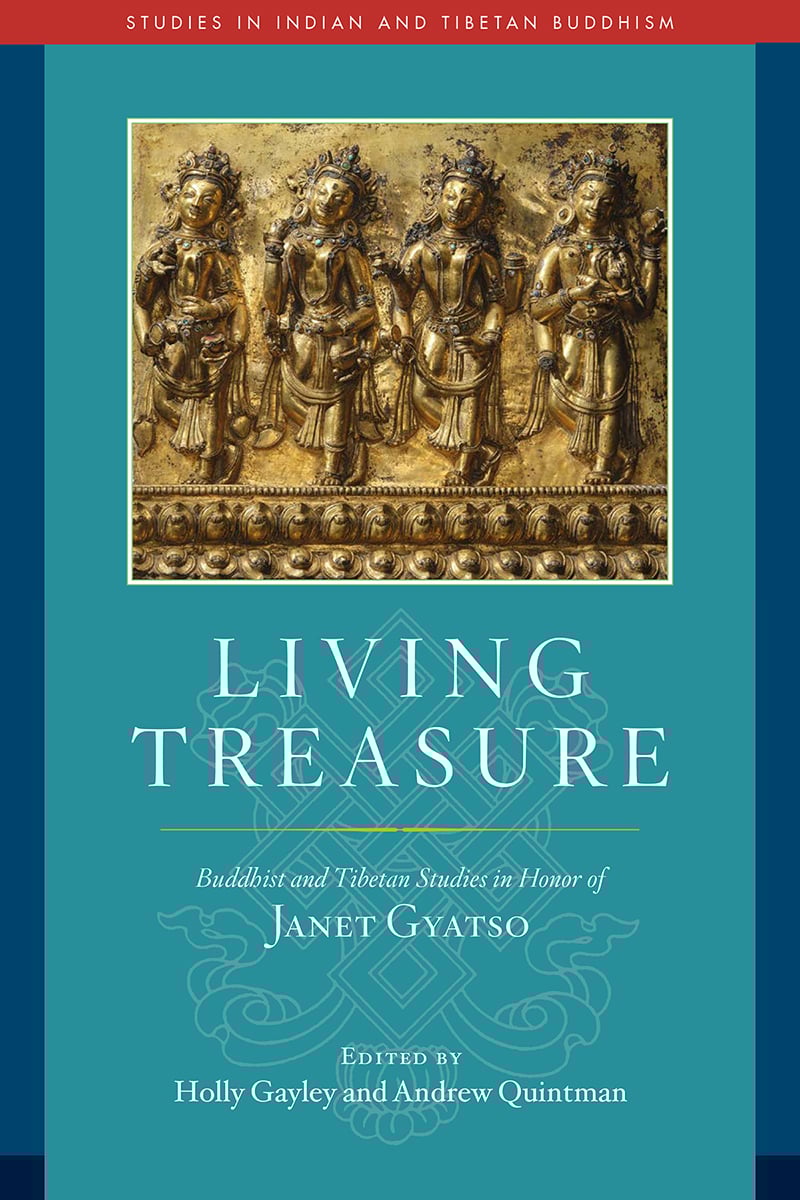
I’m delighted to announce the publication of Living Treasure: Buddhist and Tibetan Studies in Honor of Janet Gyatso, a set of 29 essays celebrating the life and research of my graduate school mentor and longtime friend Janet Gyatso.

This is one of those projects started before the pandemic that took several years to come to fruition. The essays are brilliant and align with Janet’s major interests in her career: Women, Gender, and Sexuality; Biography and Autobiography; the Nyingma Imaginaire; Literature, Arts, and Poetry; and Early Modernity: Human and Nonhuman Worlds. Order through Wisdom Publications.

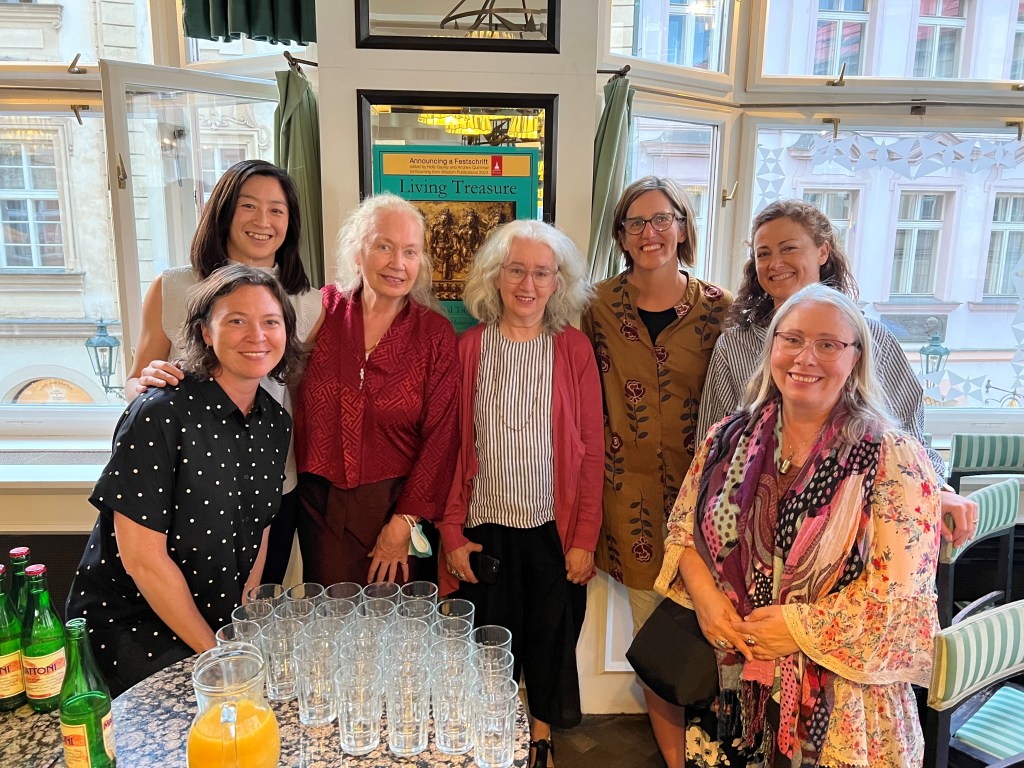
It was a delight to work with Andy Quintman on this. Last July in Prague, at the Sixteenth Seminar of the International Association of Tibetan Studies, we had a party for friends of Janet and contributors to the anthology.

Continue reading

The Year of Tibetan Women Writers

Tibet Himalaya Initiative welcomes Tibetan women writers to CU Boulder

It’s been an amazing year of celebrating Tibetan women writers, thanks to the UVA Tibet Center, Tibet Himalaya Initiative at CU Boulder, Northwestern University, and more. In April, CU Boulder was honored to host Tibetan women writers Tsedrön Kyi, Nyima Tso, and Min Nangzey for a public reading of their works and lunch symposium with Tibet Himalaya Initiative faculty, graduate students, visiting scholars, and local translators. Thanks to Tashi Dekyid, Erin Burke, and Jue Liang for gathering an incredible group of Tibetan women writers from North America, India and China at UVA and arranging for some of them to visit other US universities.

Here are a few of the events that I have been honored to participate in and help with this year:

It’s auspicious that this year was also the culmination of a collaboration with Somtso Bhum, my previous MA student now doing her Ph.D. at Northwestern University. Our article, “Parody and Pathos: Sexual Transgression by ‘Fake’ Lamas in Tibetan Short Stories,” was published in April 2022 in Revue d’Etudes Tibétaines. It takes up contemporary Tibetan short stories about sexual abuse by Buddhist lamas and features several short stories by Tsedrön Kyi.

More about the article:

Continue reading

New Anthology: Voices from Larung Gar

Just released in April!

Voices from Larung Gar is the first collection of talks and writings by the leading voices of Larung Gar, the largest Buddhist institution on the Tibetan plateau. The book offers a compelling vision for Buddhism in the twenty-first century by some of the most erudite, creative, and influential Tibetan Buddhist luminaries today. In everyday language, these leaders delve into an array of contemporary issues, including science, ethics, gender equity, and animal welfare.

This collection features contributions from a range of prominent figures who are forging dynamic, modern paths forward for an ancient tradition. Included are the internationally renowned Khenpo Jigme Phuntsok, founder of Larung Gar, his distinguished successors Khenpos Sodargye and Tsultrim Lodro, and erudite nuns holding the scholarly title Khenmo, who are becoming known for their impressive publishing projects. Larung Gar is thus one of Tibetan Buddhism’s most vital communities, actively balancing cultural preservation and innovation.

AVAILABLE FOR ORDER NOW at Shambhala Publications
Enter code VOICES30 for 30% off before May 15, 2021.

“This anthology gives voice to the amazing leaders of the most dynamic Tibetan Buddhist institution of the last century. It illustrates vividly the remarkable ways in which Larung Gar monks and nuns are engaging modern social issues while remaining deeply grounded in their beloved Buddhist traditions.” —David Germano, Executive Director of the Contemplative Sciences Center at the University of Virginia

Continue reading

Karma and Female Agency in Bhutanese Novels

Congrats to Sonam Nyenda and Tshering Om Tamang for the inaugural issue of the International Journal for Bhutan & Himalayan Research!

I am honored to be the guest editor for this special issue on “Contemporary Bhutanese Literature,” featuring academic articles by Sonam Kinga, Sonam Nyenda, Tshering Om Tamang and myself, along with an essay by leading Bhutanese writers, Chador Wangmo, Rinzin Rinzin and Namgyal Tshering, and other contributions. Also included is an important Preface on “Why Bhutanese Literature Matters” by Dorji Thinley, President of the Paro College of Education, Royal University of Bhutan.

My own article on “Karma and Female Agency in Novels by Bhutanese Women Writers” engages in a comparison of the novels, Circle of Karma (2005) by Kunzang Choden and Kyetse (2017) by Chador Wangmo. There are a number of parallel features in these works that make for a salient comparison. Both center on female protagonists who begin their lives with keenly-felt religious aspirations and, following a series of misfortunes that propel them from their homelands, eventually become nuns. Both are unflinching in confronting gender issues, including sexual abuse and human trafficking, through the lived experiences of an array of female characters. In addition, both use karma as a narrative devise, though to different effect, at pivotal moments in the narrative as the protagonists attempt to make sense of their predicaments. In analyzing these novels, my article examines the gendered deployment of karma and its relationship to female agency.

The PDF of the inaugural issue of the International Journal for Bhutan & Himalayan Research (Fall 2020) is available here:
https://www.colorado.edu/tibethimalayainitiative/sites/default/files/attached-files/ijbhr_inaugural_issue_fall_2020.pdf

Buddhist Visions of the Feminine

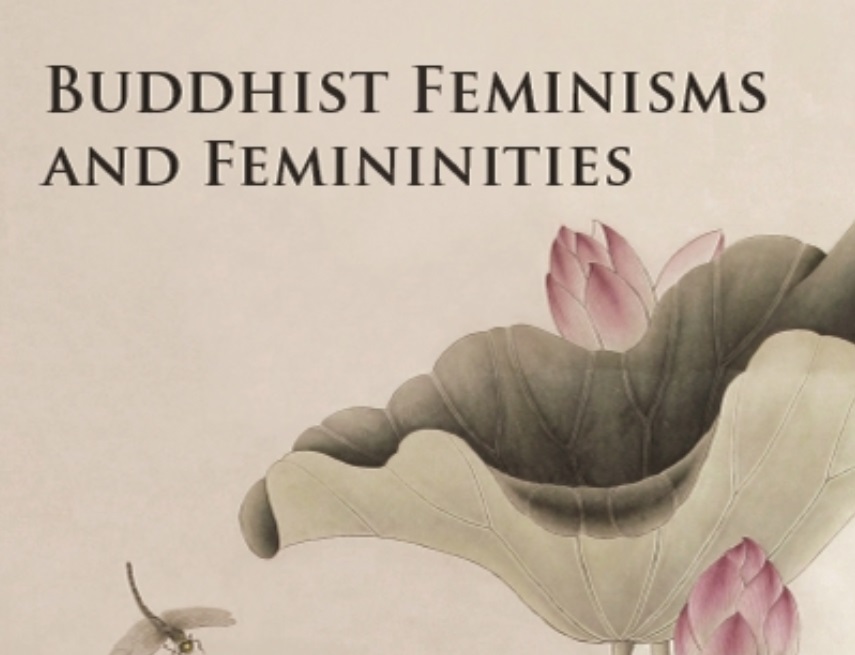
Buddhist Feminisms and Femininities (cover)

When recounting the life stories of female visionaries, male cleric authors build on specific gendered ideals of sanctity. What is the rationale for and impact of their choices? My chapter in the newly published volume, Buddhist Feminisms and Femininities (2019), edited by Karma Lekshe Tsomo, compares three different versions of the life of Khandro Tāre Lhamo (1938–2002), a contemporary visionary from the Tibetan region of Golok. Each version was composed by Tibetan cleric-scholars from different regions and offer divergent perspectives on her life. Whereas in earlier hagiographic writings, Tāre Lhamo’s life is to a large extent subsumed into that of her second husband, Namtrul Rinpoche (1944–2011), the newest namthar (or story of “complete liberation”) by Khenpo Rigdzin Dargye from Tsimda Gompa, the monastery founded by her father, presents her story on its own terms. Based on interviews with locals in her homeland, especially female companions in youth, this namthar sheds new light on Tāre Lhamo’s early years and local understandings of her religious vocation and standing. A comparison of these three versions of her life promises to reveal the surprising ways that attention to geographic and institutional situatedness can nuance our understanding of the models male authors choose to depict their female subjects.

New Book of Translations: Inseparable Across Lifetimes

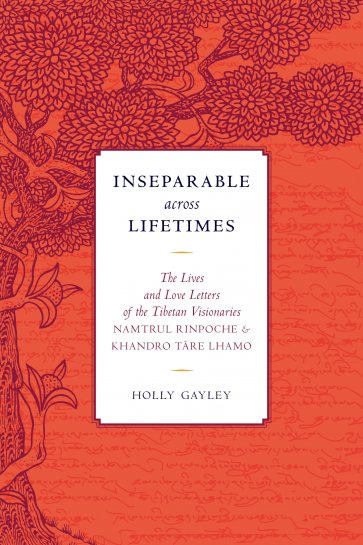
inseparable across lifetimesAwarded the Kayden Translation Award at CU Boulder.

An inspiring and intimate tale set against the turmoil of recent Tibetan history, Inseparable across Lifetimes offers for the first time the translations of love letters between two modern Buddhist visionaries, Khandro Tare Lhamo and Namtrul Rinpoche. The letters are poetic, affectionate, and prophetic, articulating a hopeful vision of renewal that drew on their past lives together and led to their twenty-year partnership. This couple played a significant role in restoring Buddhism in the region of Golok once China’s revolutionary fervor gave way to reform.

Order on Amazon.com.

“An instant classic, Gayley’s translations of contemporary love letters between a Tibetan visionary couple are luminous. The couple’s spiritual courtship animates a relationship that bridges the traditional and modern, transcendent and mundane. This is an inspiring page-turner that shows mutually transformative love is really possible.”

—Judith Simmer-Brown, author of Dakini’s Warm Breath: The Feminine Principle in Tibetan Buddhism

Inseparable across Lifetimes tells the amazing personal stories of two Buddhist masters in twentieth-century Tibet, and their love letters are skillfully translated here into soaring yet intimate English. Few publications record this crucial time period after the cultural devastation of Tibet, and fewer still offer such visionary hope for some kind of transformation.”

—Sarah Harding, author of Niguma, Lady of Illusion

“In a love relationship that was not just based on ordinary passions, but rather the union of incisive knowledge and skillful means, Namtrul Rinpoche and Khandro Tāre Lhamo came to know the pure essence of wisdom exaltation as the sacred union of male and female. They used this unobstructed power to work for the welfare of others through their enlightened deeds. I am grateful to Holly Gayley for bringing their exemplary life stories and songs of profound union into the English language so that readers can glimpse the best of our Tibetan Vajrayana tradition.”

—Lama Chonam, teacher and translator, Light of Berotsana Translation Group

Secrecy & Tantric Consorts

Padmasambhava and Yeshe Tsogyal in YabyumWith the global #MeToo movement underway, and recent disclosures of sexual improprieties and alleged abuse within Tibetan Buddhist communities, it seems timely to revisit the topic of sexuality in Buddhist tantra.

My newly published article, “Revisiting the Secret Consort (gsang yum) in Tibetan Buddhism” (Religions, June 2018) offers a historical lens on consort relationships to help inform contemporary contexts and controversies. I discuss shifting views and practices toward sexuality and secrecy in Tibetan Buddhism and provide examples of 20th century women who have engaged in consort relationships.

Is the consort relationship (heterosexually conceived) empowering or exploitative to women? I try to complicate this question, first raised by feminist scholars in the 1990s, by showing the variety of experiences women have had across spacial and temporal distances–from eastern Tibet to North America.

I also call attention to current voices advocating for greater transparency around sexual misconduct and alleged abuse in Tibetan Buddhist communities in Europe and North America.

Padmasambhava and Yeshe Tsogyal in union, photo by Holly Gayley.