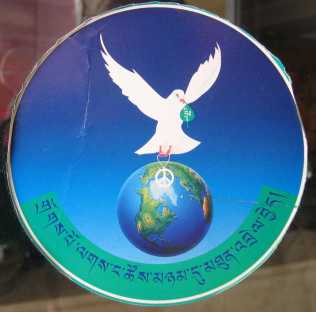
 In the last decade on the Tibetan plateau and in the diaspora, several movements have emerged that interlink Tibetan identity and Buddhist ethics. These include the new “ten virtues” (dge bcu) promoted by Larung Buddhist Academy in eastern Tibet, the Lhakar or ‘White Wednesday’ (lhag dkar) movement underway since 2009, trends in Tibetan pop music, the ‘amulet for peace’ (zhi bde rtags ma) introduced in 2012, and more.
I trace these in a chapter on “Buddhist Ethics in Contemporary Tibet” published in the new Oxford Handbook of Buddhist Ethics (2018). The chapter explores ethical reform as a constructive process of subject formation in which loyalty to Tibetan culture and devotion to Buddhist teachers overlap. It is the culmination of several publications on Ethical Reform in Eastern Tibet.
Photo: The image for the “amulet for peace” combines global symbols for peace (dove and peace sign) with Buddhist imagery, a bodhi leave with the seed syllable Hrih on it. On this sticker, the Tibetan reads: “Friends, let’s create harmonious relations together.” Read more about the amulet for peace in an article I co-authored with Professor Padma ‘tsho, “Non-Violence as a Shifting Signifier on the Tibetan Plateau” in the journal, Contemporary Buddhism. Photo Credit: Holly Gayley.
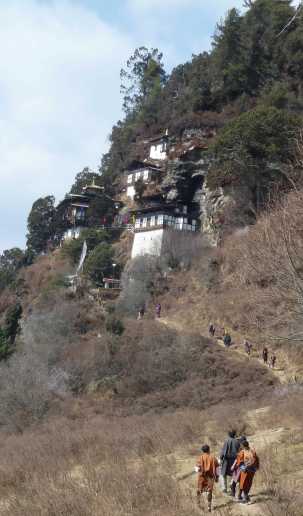 Visiting Bhutan again after fifteen years felt like coming full circle. My first research project explored the revelatory career of Pema Lingpa (1450–1521) after Sarah Harding invited me to write the introduction to her book of translations,
  The paperback is now out for Love Letters from Golok: A Tantric Couple in Modern Tibet, which chronicles the lives and letters of
 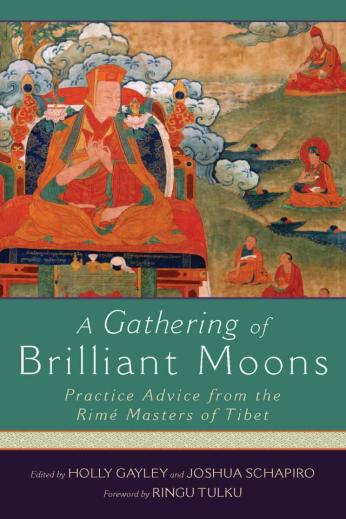 Pithy works of advice on meditation practice can often be difficult to find in translation. Just published by Wisdom,
 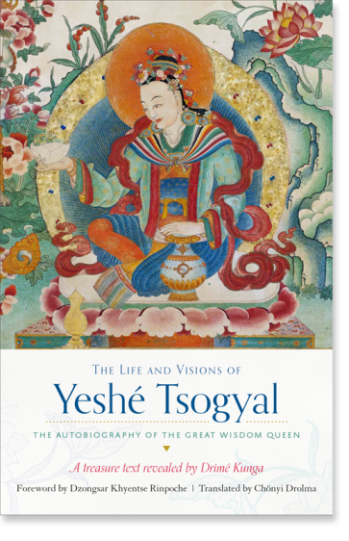 Yeshe Tsogyal is the foremost Tibetan woman associated with the advent of Buddhism in Tibet. This was a time of imperial power, when Tibet controlled vast tracts of Central Asia between the seventh and ninth centuries. A princess-turned-yogini in the lore of that period, Yeshe Tsogyal is remembered as the disciple and consort to the great Indian tantric master, Padmasambhava, and later a teacher in her own right. She has remained central to Tibetan art and ritual and continues to be a living presence for Tibetans amid pilgrimage sites associated with her, in the visions of realized masters, and through her emanations in each generation.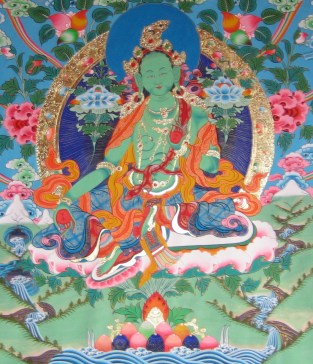
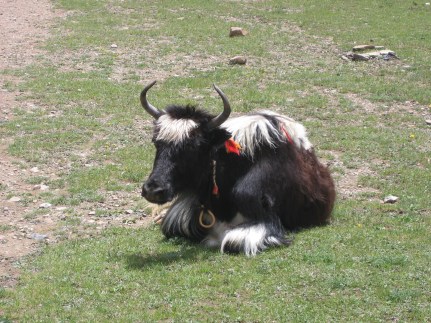 Though the 17th Karmapa may be more well-known in the west for his promotion of vegetarianism at the 2007 Kagyu Monlam, Khenpo Tsultrim Lodro has campaigned for the compassionate treatment of animals on various fronts since the early 2000s.
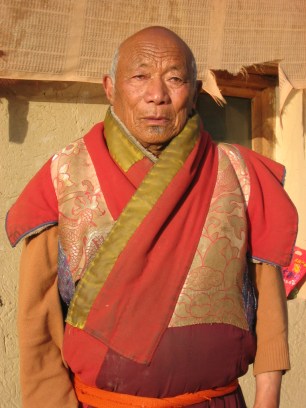 When traveling in Padma County, a Tibetan friend took me to meet her great uncle, Pema Garwang, a Tibetan doctor who survived eighteen years of prison during the Maoist period. To bolster his courage, he composed this aspiration prayer to Khandro Tare Lhamo:
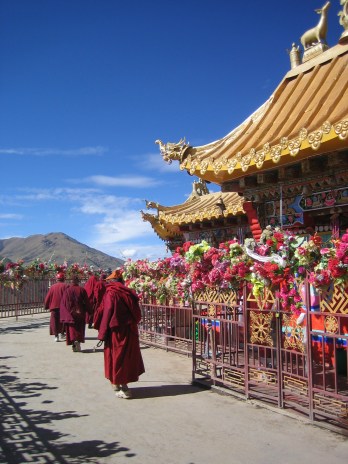 Buddhist ethical reform has become a major force in eastern Tibet, spearheaded by Larung Buddhist Academy in remote Serta, also known as Larung Gar. A new set of “ten virtues” (dge bcu), first formulated in 2008, have spread to neighboring areas in Kandze Prefecture and beyond. In “
 HOLLY GAYLEY